
Why can’t we live together?
Today’s post in the Songsmiths series came out of the blue one evening as I was watching the TV news which consisted mostly of images of war, theft, violence, bullying and plain old nastiness. I realised that I had had enough. Who wants to see this? I needed a break.
I went to the kitchen to wash the dishes. The radio was on, tuned to FIP, the 24/7 Radio France multi-genre music station. I was digging deep into those dishes when the song began. Why can’t we live together by Timmy Thomas felt like it was playing right off my inner juke-box, but it was actually coming live to my kitchen as I washed those dishes and tried to wipe away those unchosen news images.
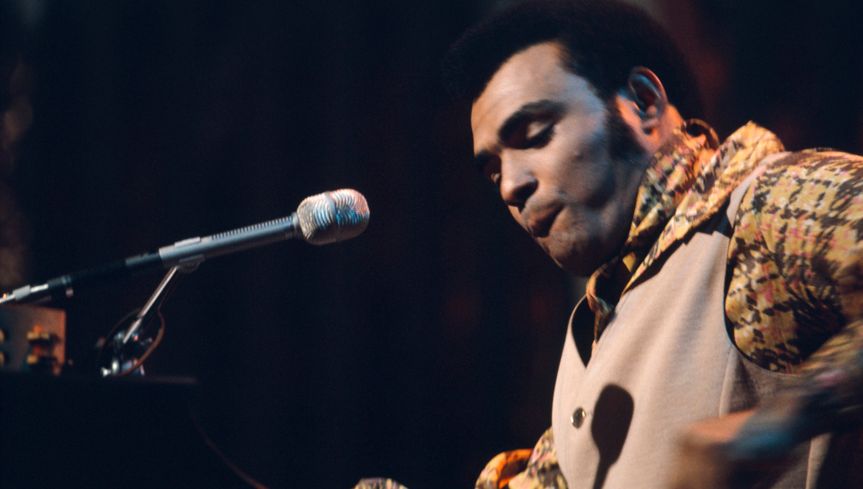
The song’s opening instrumental lasts over 90 seconds. I recognised it from the first clicks of the curious beat from that rhythm box which snapped me out of the mixed feelings which had been gnawing at me. And, when the organ came sliding in, images of seeing a film of Timmy Thomas performing came back to memory. I remember seeing those fingers flicking around the keyboard while the musician’s feet danced on those strange bass pedals and his upper body swayed in time. This old song suddenly sounded new.1
I was physically at home, of course. But the music directed me somewhere deeper. I was no longer simply at home. In a bigger way, I was back in territory I knew, following the alienation of the news broadcast. Here were values I shared. Values I was ready to defend.
Why can’t we live together by Timmy Thomas is the subject of this latest post in the series Songsmiths.
Turning away from the news
Having turned away from the news, with all its talk of numbers of the dead and dying, the stalemate of so-called ceasefire talks, and yet more threats of attacks and invasions, I was refusing to let my personal territory be invaded. I just had to get away. That was when I happened upon the song.
The unusually long instrumental opening drew to a close and the voice I was waiting for came floating in with its inevitable question : Tell me why, tell me why, why can’t we live together? Timmy Thomas‘s timeless question summed it all up. What has gone so wrong with the world that we have apparently become unable to live together?
Then he extended the question : Everybody wants to live together, why can’t we live together? When the song was first released back in the early 1970s, living together was also commonly used to describe living as a couple without getting married. It was a growing trend. Sometimes it worked, sometimes not.
Listening to the song all those years ago, I remember thinking at some point that maybe it was a man pleading with his partner to move in together rather to get lost in endless quarrels which come from the frustration of having to live apart.
VERSE 1
Tell me why, tell me why
Why can’t we live together?
Tell me why, tell me why
Why can’t we live together?
Everybody wants to live together
Why can’t we live together?
I was much younger at the time. I knew adults often argued for the wrong reasons, butI kept that interpretation to myself. The song hasn’t changed, but I have, and I can see it differently now. Right from the first line, I hear the idea of good neighbourliness as a way to promote tolerance and respect. Good neighbourliness is now also a principle of international law reconciling the interests of one country with those of that country’s neighbours : looking out for each other also means taking care of each other and sharing where we live.
Story behind the song
What I didn’t know until recently was that Timmy Thomas originally wrote Why can’t we live together in response to his own feelings when watching an evening news report on TV at home in Miami, Florida at the time of US involvement in the Vietnam War. He still remembers the moment when he heard the day’s death toll :
I said “WHAT?! You mean that many mothers’ children died today? In a war that we can’t come to the table and sit down and talk about this, without so many families losing their loved ones?” I said, “Why can’t we live together?” Bing! That light went off. And I started writing it then. “No more wars, we want peace in this world, and no matter what color, you’re still my brother.”2
Song about today?
In 2026, living together is about sharing the same national or global space of political, economic and social conflict. Thomas‘s song from the 1970s still works even though the world has changed. Look at Verse 2.
VERSE 2
No more war, no more war
Just a little peace in this world
No more war, no more war
Just a little peace in this world
Everybody wants to live together
Why can’t we live together?
Thomas makes his plea : No more war, just a little peace in this world. He’s responding to death in the Vietnam War back in 1972, but he could be talking about Ukraine, Gaza or almost any community of any sort today. When the bombs stop momentarily in conflict zones – not ending the war but giving them a little peace – it is said people go outside to check, as if there were some unbelievable mistake. Conflict is the norm for some people. And conflict feeds conflict.
Timmy Thomas says we need peace, but he doesn’t stop there. In Verse 3, he goes deeper and answers an implicit wider question which could be formulated as Why do conflicts occur?
He points to skin colour as a trigger for hostility : No matter what colour, you are still my brother / Everybody wants to live together, why can’t we live together? Replace colour by any other discrimination and his observation still stands. Then replace brother with sister, mother, father, colleague, friend and so on, and look around. We let visible differences create disharmony.
VERSE 3
No matter what colour
You are still my brother
I said no matter what colour
You are still my brother
Everybody wants to live together
Why can’t we live together?
But ancient memory tells us that the magic is also in the mix. What makes us different is what ensures our survival, because that plurality is what makes us human. I was born speaking English and now spend most of my life speaking French. The mix I’ve become has helped me to endure. We all need variety. In the age of populists and influencers, the current push for people to follow the crowd may reassure some people, but once the party is over we could find ourselves waking up in a dull, claustrophobic place we don’t really like.3
Types of territory
What makes us reject people who are different to ourselves? As a rule, we grow up learning to defend and protect a territory and its values4 in order to keep it within our control. Sometimes we open up our territory to people from elsewhere, newcomers of all sorts. We do this out of generosity and because we feel strong and respected. In such cases, we make them feel welcome.
But what happens when home territory no longer feels like home? What do we do when people start saying that those newcomers – or the descendants of those newcomers – are using us, manipulating us? By accepting people fleeing other crisis areas around us, have we ourselves victims of some invisible war?
Sometimes we are willing to do almost anything to take back control – even turn against our own traditions of hospitality. This in turn can lead to deeper territorial disputes, because taking back control can even involve annexing neighbouring countries because they seem weak or because their mineral resources seem to be there for the taking. Those who disagree become the enemy. And so it goes on.
Song with a beating heart
Why can’t we live together asks such a fundamental question that it has a timeless quality which will always make it sound contemporary. Paradoxically, it was written, recorded and pressed in a hurry by Timmy Thomas who took it the same day to get it played on a radio station. But then it took months for it to become a success.
There are only three instruments on the recording : a Lowrey organ, a Maestro Rhythm Master rhythm machine5 and Thomas‘s voice. The lyrics he sings could easily be imagined whispered in somebody’s ear or shouted as a slogan in somebody’s face. It’s that kind of a song. And the other day I noticed, for the first time, that each verse has a similar consonant feature : Tell Me Why … No More War … No Matter What colour … The repetition of the consonant pattern with different words gives us the same call for peace and harmony in different articulations.
And that percussion? A heartbeat, nervous and sometimes irregular, but never out of time. A song with a heart which still beats, because life must go on and learning how to live together is a lesson which is never over. The work of a true songsmith.
Still want more?
There are many cover versions of this haunting song listed on the brilliant whosampled.com page. None of them quite match the original for me.
Sporting confrontations often resemble wars or battles for the control of territory. You may be interested in reading this post about a fight between football supporters which incorporates George Orwell‘s famous observation that sport is war minus the shooting.
There are other songs in the growing Songsmiths series which you can find here. Artists already featured include Chrissie Hynde, David Bowie, Brian Wilson, Mary Gauthier and Bruce Springsteen.
Notes
- Thomas was a one-man band. A live version of Drown in my own tears from 1979 starts with him saying to the audience : “I’d like to introduce my foot which is my bass player, my left hand which is my organ player, my right hand which is my guitar player …” ↩︎
- Interview from 2015 with Spin Magazine, quoted by Wikipedia page about the song. ↩︎
- For a different take on the same subject : Going against the flow : can we still think for ourselves? ↩︎
- Physical territory can be defined as “an area of land, or sometimes sea, that is considered as belonging to or connected with a particular country or person.” ↩︎
- David Deal explains : “Timmy Thomas used an early rhythm machine set to a bossa nova-style percussion pattern, which is evident within the first 30 seconds. He performed “Why Can’t We Live Together” as a one-man band, using a Lowrey organ, his own vocals, and a rhythm machine (specifically, the Maestro Rhythm Master and the “Latin: Mambo” preset from the Lowrey AR-4 drum machine). This use of a drum machine in place of live drums was groundbreaking at the time and contributed to the song’s distinctive, haunting sound.” ↩︎
Discover more from GERRY THE KENNY
Subscribe to get the latest posts sent to your email.


