
Text updated on 23rd July 2026
ARTICLE DISPONIBLE EN FRANÇAIS ICI
Who wouldn’t fancy a trip to Britain? For Europeans, it used to be easy to enjoy lunch in London, a match in Manchester or an evening in Edinburgh. All you had to do was hop on a plane, jump on a Eurostar or catch the ferry. You could even decide to live and work in the UK. But Brexit changed all that.
As an occasional visitor to the UK, I would like to add a new post to the Foreign Affairs section of this blog and share my experience of how the new rules apply. I hope this UK travel update will give you some idea of the obstacle course ahead next time you decide to cross the Channel.
A tale of two passports
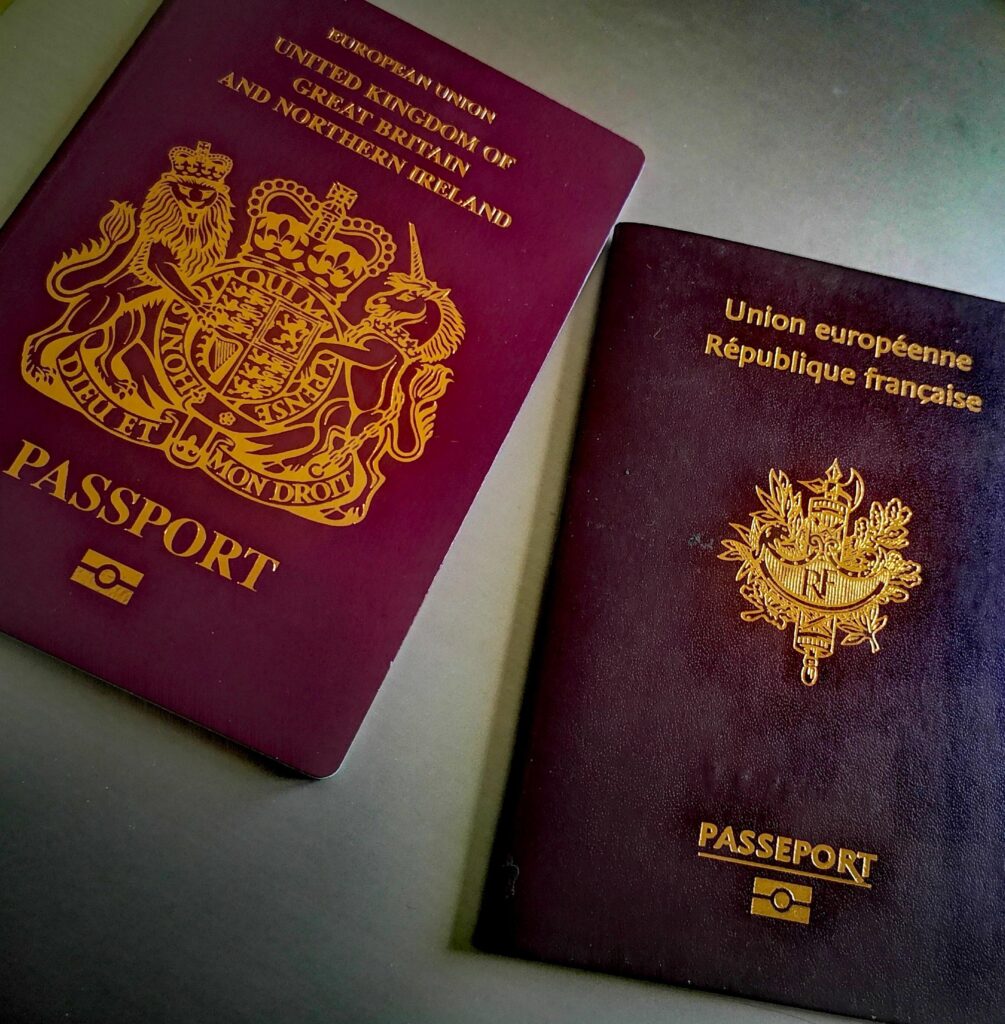
I have two passports, one for each of my nationalities. As a rule, I travel on my French passport for emotional reasons which I freely admit : I obtained French nationality after a long administrative ordeal, France is now my home, and French is the language I speak most from day to day. In addition to this, I also prefer this passport when travelling with my wife, who is French, because this means that we don’t get separated or treated differently during transit.
However, since 2 April 2025, there are new rules for foreigners travelling to the UK. Anyone who is not British1 is required to register their passport before travelling and request an ETA or Electronic Travel Authorisation. This is valid for 2 years and gives visitors the right to stay in the UK for up to 90 days in any single 180-day period. The visa costs £16, which is equivalent to about 19 euros.2 So do I travel French and pay for the privilege, or go British for free?
Who wants to pay for a visa to go back to the country where they were born and from which they still carry a valid passport? Not me. I did actually try to register as only French for this visa procedure but was caught out by the question concerning any other nationalities I may have. In the end, I had to accept that I would travel on my British passport. Here’s the story of what happened at Passport Control.
Lost in translation at border control
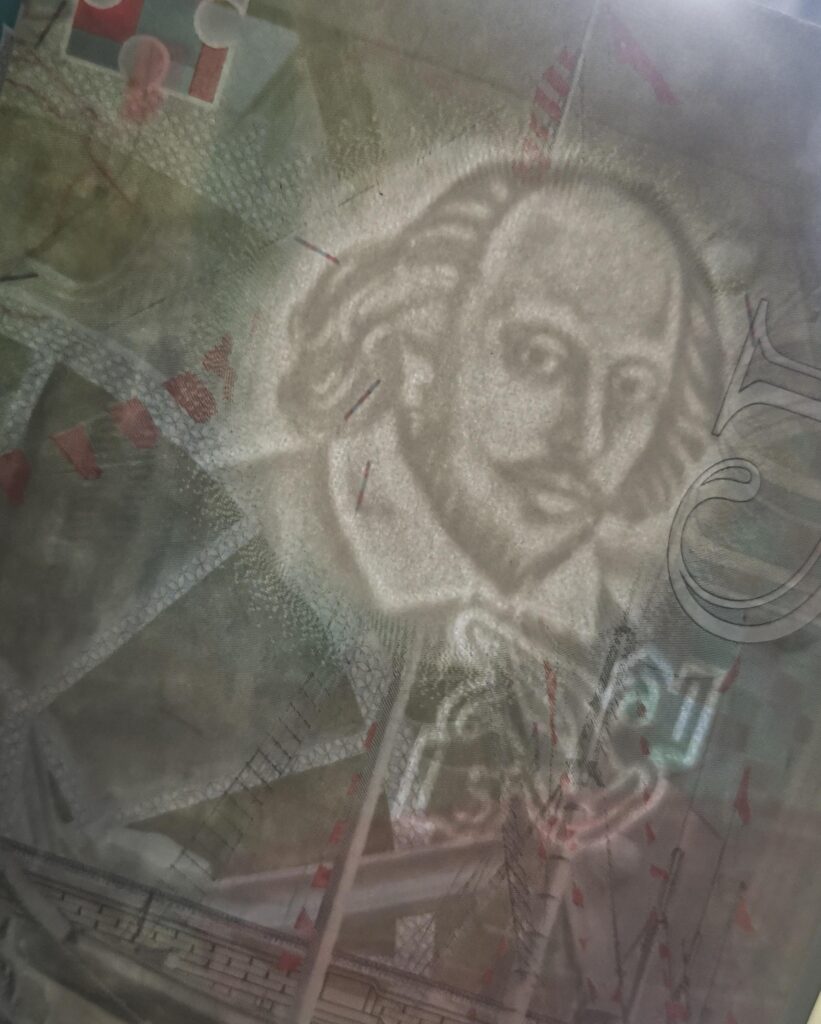
Fast forward to Border Control between France and the UK on the day of travel. Time to pull out that passport – the one with the Shakespeare watermark on the pages. I push my British passport into the tray which the Passport Control Officer slides shut. He picks up the passport, opens it, looks at the photo, looks at me, scans the passport. He then starts flicking through the pages, all 30 of them, once, then twice. Every single one. Then he says : You live in France but there’s no residence stamp on this passport. Do you have another residence permit? Fortunately, I have my other passport with me, the one with the figure of Marianne, symbol of the French republic, as the watermark in its pages – something I decided to bring along at the last minute. I hold it up so he can see it. Well, all I have is my French passport. He asks to see it so I push it into the tray which he slides back towards him. I realise he now has both my passports. I have never trusted anybody with both before. Is there a problem? I ask, hoping there isn’t a problem, but wondering all the same. He scans the passport thoughtfully. I am a dual national, I say, stating the obvious, but needing to say something. No problem, he says. Everything’s fine, Sir. It’s just that, if you only had the British passport, you’d need a stamp for residence purposes. That’s what I was looking for to start with, but there were no stamps. No problem at all, Sir. Have a good journey.
I collect both my passports again. then I’m through the border. Which language did we speak? Hard as I try, I can’t for the life of me remember. He used the word stamp but he also said titre de séjour. Unless that was the translation which sprang to mind when he said residence permit? How odd. It could have been either. Things like this happen at borders, the space in between.
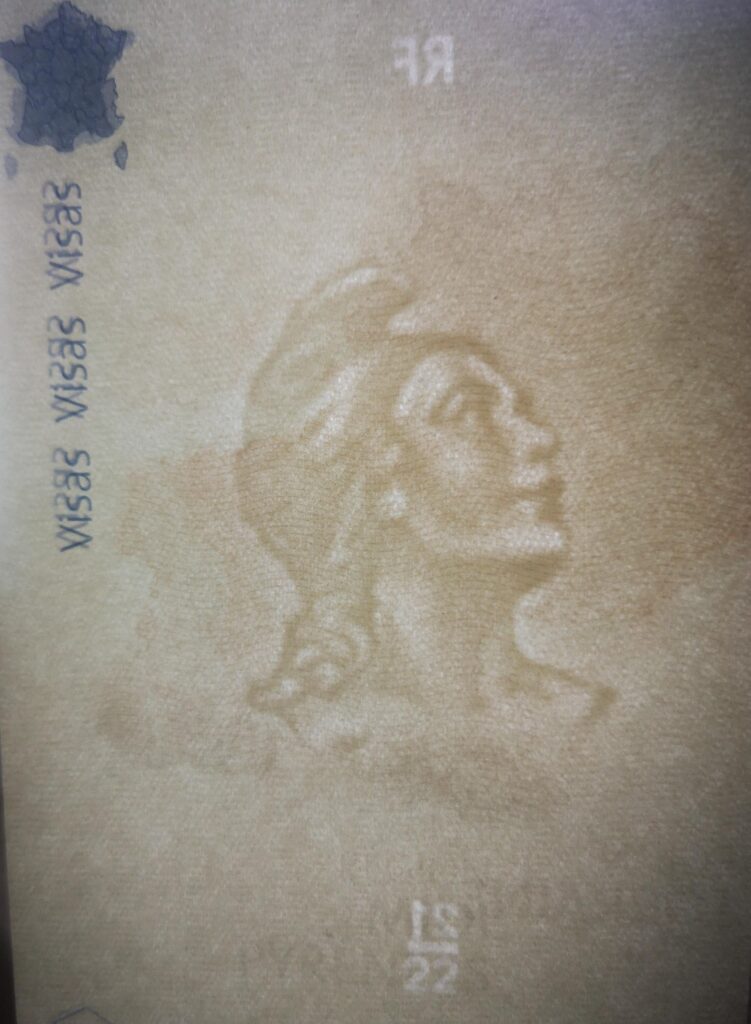
Returning to France from the UK at the end of my short stay I get to Border Control once more. This time I change tone. I make it clear from the start that I have two passports and present both, saying that I am a dual national and I imagine the Passport Officer needs to see both. No, just the French one, Sir. Okay. I slide it through for inspection. He opens it, looks at it, looks at me, scans the passport, then gives me both back. This leaves my British passport unlooked at. I have to ask : You didn’t look at the British passport? He smiles. Not necessary, sir. With the French one, you don’t need a stamp. Oh yes, the stamp. I’d forgotten the stamp.
Easy really. I was British on the way out of France and French on the way back but both all the time.
A border can be many things
The term border is defined as “a line that has been agreed to divide one country from another”. On my journey I saw it as a space in between, a place for stamp inspection. But a border can be many things.
For cross-border commuters, workers crossing back and forth daily from one country to another, expectations revolve around hoping everything will go as usual on a particular day or at a particular time so there will be no unnecessary hold-ups created by other people breaking routine.
For migrants, often carrying trauma with them, a border crossing is the tipping point between the life before and the life to come : going from the familiar place they leave, and continuing on the hoped for onward journey towards arrival in the new life of the foreign country which is their destination. Successfully crossing is an absolute necessity which can mean putting life itself on the line.
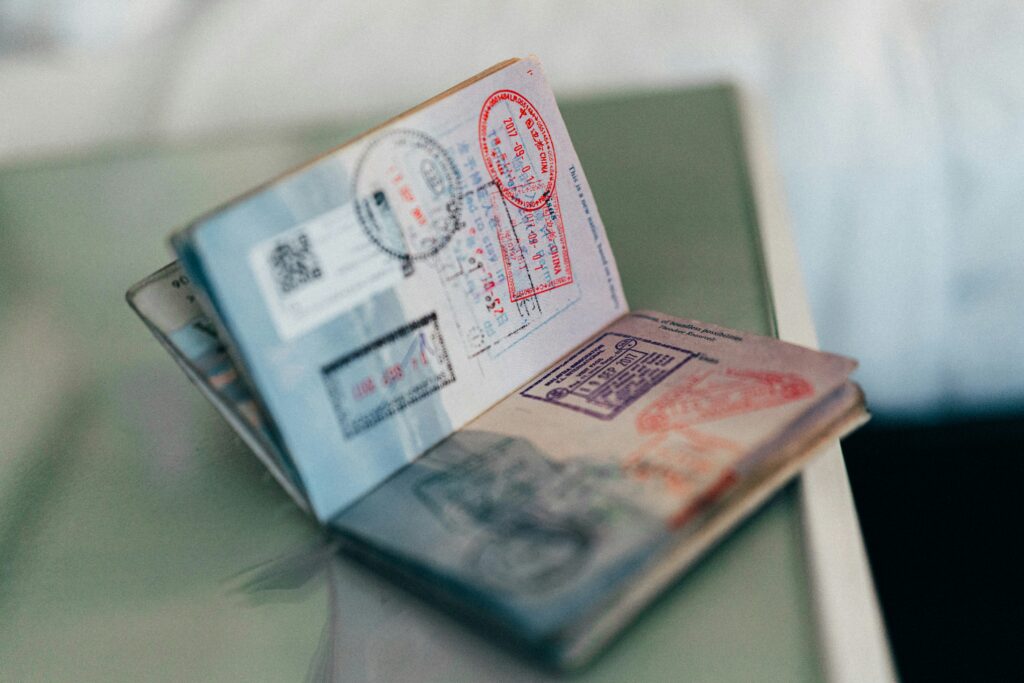
For ordinary travellers or simple tourists going on shorter visits there may come a time when they actually choose to avoid going to certain countries for fear of having to face a possible awkward border passage through a passport or customs check. Even when they have nothing illegal to worry about, they dread the prospect of that anxious moment when their inner voice takes over : Have I got all the right documents ? Will I understand what they say to me ? Will I be stopped for further questioning ? The country may be desirable, but the border passage isn’t.
On a world scale, these are certainly strange days for borders. In his rambling speech to the United Nations assembly in New York on September 23rd, 2025, the US President claimed that “It’s time to end the failed experiment of open borders.” He seemed to be talking about the tension between the European ideal of freedom of circulation and the current multiplication of rhetoric and rough stuff rejecting not only migrants but foreigners in general in certain countries previously considered tolerant. It is highly likely that he also had in mind his own fellow citizens who look or think in ways he cannot accept – “the enemy from within” being the chilling expression he used for them shortly after his re-election.
New rules for the UK
Today, a border is no longer merely a line that has been agreed to divide one country from another, but a control point which nobody shall cross without a verified autorisation to do so. And the United Kingdom being a group of islands, everywhere the sea meets the land is a border. That’s a lot to control.
Fuelled by the need to take back control, during the referendum campaign in 2016 supporters of Brexit fervently believed that “Britain’s sovereignty, ability to make its own laws and ability to control its borders had been lost due to its membership of the European Union and would return after withdrawal.”3 Paradoxically, since Brexit took official effect on 31 January 2020, both legal and illegal migration to the UK have been constantly rising – as this report from the European Commission confirms.
The introduction of the ETA requirement in April 2025 for all foreigners responded to a need to monitor who comes into the country. Now any foreigner who wants to go to Britain legally must first register name and nationality with a passport to prove it. The granting or refusal of an Electronic Travel Authorisation in order to cross the UK border is a decision made long before that traveller arrives at Passport Control.
In case you’re wondering what the situation is for UK nationals travelling to Europe, there is the same limit to how long they can stay but the service is free. As the UK Government website explains : “You can travel without a visa to the Schengen area, which includes France, for up to 90 days in any 180-day period“. This means Brits don’t have to pay for a visa if their stay is less than 90 days. This applies to all 29 countries in the Schengen area which, as we know, “guarantees free movement to more than 450 million EU citizens, along with non-EU nationals living in the EU or visiting the EU as tourists, exchange students or for business purposes, anyone legally present in the EU.“
That looks like a good deal for British citizens. They have freedom of movement in conditions which are more generous than those which they themselves give to foreigners wishing to come to Britain. However, the introduction of the ETA is only a part of a wave of new legislation concerning freedom of movement in the UK. In September 2025, there was also the announcement of a new Digital Identity Card – an aspect to the Starmer government’s reforms which promised to affect Brits directly in their own country.
The beginning … and the end of the first Digital ID card for the UK
You can hear all about this announcement in this Sky News report from 26 September 2025 which heralded the introduction of the BritCard, a digital identity card for all adult UK residents – not just UK nationals but all UK residents. In the report, the journalist explains that this major change in British society, where ID cards had long been seen as an infringement on civil liberties, is a response to “French pressure” to reduce the pull factors for the current seemingly unstoppable flow of illegal migrants arriving in small boats. Until then, it had been possible for illegal residents to work and earn a living in the country with no requirement to carry proof of identity. All individuals would now be required to register with the authorities via the BritCard – an article in Security Journal UK weighed the pros and cons to this sea change for British society.
It was specified that the BritCard would not replace passports because, according to the Government Explainer website, “The processes at airports and ports around the world require a physical passport to be presented when you arrive in a new country.”
But then in July 2026, Andy Burnham replaced Keir Starmer as UK Prime Minister. Costing £1.8 million to implement, the ID card had already been coming under a lot of criticism – an online petition was gathering momentum – when Burnham proudly announced that his first policy decision on being appointed was to scrap the BritCard project. A government spokesperson explained that “time and resource that was going to be spent on a national ID scheme will go instead to where it’s most needed, such as helping with the cost of living”.
ID Cards and passports are politically charged documents. When travelling, there’s no companion quite like a physical passport. For the moment I have two, and there is still no ID card for UK citizens. I’ll let you know if that changes.
Check out Foreign Affairs for more posts on aspects of the foreign experience.
- With the exception of Irish citizens of all ages – and French children under 18 on France-UK school trips providing the group has been previously registered with the local préfecture. ↩︎
- If you are planning to go the UK as a foreigner, there is ETA UK, a free phone app which you can download to obtain your visa. A word of advice to prospective users. The app looks simple enough, but it has a tendancy to refuse credit cards when it comes to payment time. There are numerous testimonies on line from people were so worried by this repeated refusal – imagining that this could actually also disable their credit card for other payments – that they even renewed the procedure in the presence of an advisor from their bank, only to have their card refused yet again! Problems getting the app to accept payment also led some travellers to change their UK holiday plans altogether and go to another country where there was no visa requirement!
Finally, after battling with the app and consulting various discussion threads online, the best solution is to ignore the phone app and apply by using a real old-school laptop computer. Just go to the online UK ETA website and, when you get to the section Apply for an ETA, choose the option Apply online. After this, keep refusing to download the app until you get here and then simply follow instructions and pay at the checkout. Bon voyage! ↩︎ - Quoted from the Wikipedia page on Take back control. ↩︎
Discover more from GERRY THE KENNY
Subscribe to get the latest posts sent to your email.




2 Comments
Pingback:
Gerry Kenny
There’s more on this question of travel requirements for dual nationals entering an leaving the UK. Check out this article published in today’s Guardian online : Dual nationals to be denied entry to the UK from 25 February unless they have a British passport.