
Story of a strange exchange at the bureau de change
September in Buenos Aires sees the arrival of spring. Here I am again in the city where the eternal combustion of the traffic is the norm, along with the constant mix of noise, dust and disruption from roadworks or construction sites. It is an ideal place to learn how to take things in your stride and expect the unexpected. And sure enough, when I arrive at the bureau de change, I am surprised to see that there are already two customers in front of me in the queue.
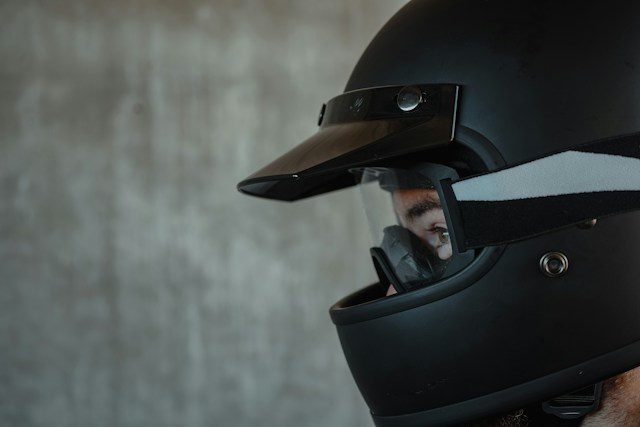
A man of thirty-something is deep in quiet conversation at the counter with the cashier who is staring back at him in careful concentration. She seems sceptical about whatever it is he is saying. But a customer is a customer. He is dressed in black like a dispatch rider, which he may well be. In his hand he holds a helmet with a tiny flashing blue light on the microphone which has been folded back, but which is still clearly connected to something.
What are they saying? What exactly is he asking for? She shakes her head and seems firm about turning down his request. But the young man insists. He pulls an envelope from his rider’s pouch. The cashier hesitates then accepts the envelope, opens it and reads the contents with slow deliberation. The man watches her without saying a word. Finally, after what is an interminable silence with total absence of movement from either person, she shrugs her shoulders and points to the closed door to the left of the counter.
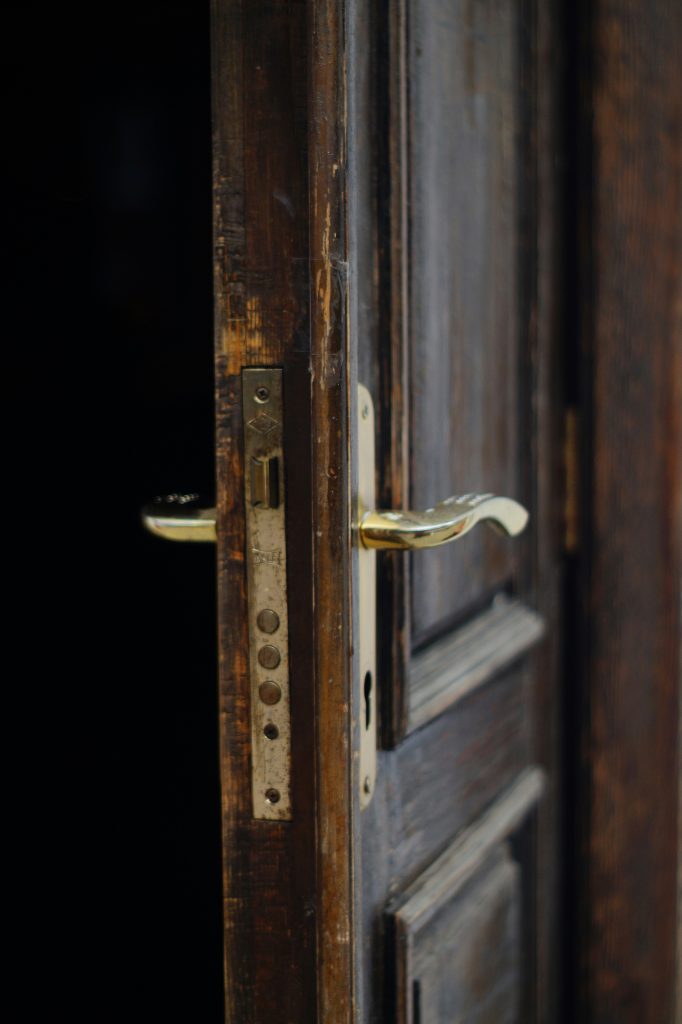
I know exactly what is behind the door, having been through it on previous occasions. It is the door to the cambio cubicle. One customer at a time. This door of discretion leads to a private space where the customer can carry out their exchange, then put away the currency received protected from prying eyes before leaving. The rider opens the door, enters, then closes the door behind him.
The cashier calls the next customer. I feel a certain satisfaction as the queue moves forward at last in the familiar atmosphere of calm efficiency I have come to expect here. It is the turn of a rather tall man. He stands very close to the glass which separates customer from cashier at the counter and engages conversation with such a loud voice that every word rings out crystal clear for anyone to hear. The complete opposite of the rider’s conspiratorial secrecy.
The man has come to pay a series of bills, a service also provided by the bureau de change. The cashier pulls one bill after another from a handful of envelopes, announcing the nature of the bill concerned and the amount to be paid. The man confirms the information which comes with each announcement in the same extremely loud voice, as if the cashier were slightly deaf, while also thanking her profusely for her assistance. He tells her that she is Muy amable and Una princesa and even, on two occasions, that she is Divina. This sudden surge of poetry is as surprising as it is magnificent.
This man really is extremely tall. He is wearing a black woolly hat, even though it is at all cold today, and a large waterproof anorak, even though there is no sign of rain whatsoever. From time to time, he turns his head to one side while otherwise standing stock still with both hands resting on the counter in front of him. I notice first that he is wearing thick dark glasses, and then that there is white cane dangling at the end of a string attached to his wrist. The man is blind.
It takes him several minutes to pay all his bills. He then retrieves all his envelopes and, with one last Ciao, divina, turns to leave. I stand aside so he is free to walk straight ahead on his way out. Could he be some distant relative to Borges? I wonder. That would explain the combination of blindness and the careful choice of words. For some reason he stops beside me and breathes in as if is going to say something. Does he know I am there? Does he sense my presence? He turns his face towards mine. The neon light from the ceiling is reflected in both lenses of his dark glasses. This double reflection is oddly troubling. Is he going to speak to me? No, he just wants to say something over his shoulder to the cashier on his way out with his powerful voice. ¡No cambies nada! She smiles before answering. ¡Nos vemos, Jorge Luis! He also smiles and away he goes.
It is finally my turn at the counter. The exchange is short – the exchange of words between us, not the exchange of euros for pesos. I know the routine and say that I have come para cambiar euros. As I anticipate, the cashier points to the closed door of the cambio cubicle, the one which the rider with the helmet of the tiny flashing blue light went through several minutes ago and still has not come out. I will have to wait a little longer.
I find myself alone sitting on one of slightly worn armchairs provided for waiting more comfortably. I tell myself the exchange will soon be done and I’ll be off. I wait patiently. The street entrance door to the bureau is open onto the pavement outside and, to pass the time, I settle into some people-watching as I watch the people poodle past. Meanwhile the door to the cambio cubicle stays shut. Time passes so slowly that I even consider going away and coming back later. As a rule, this operation takes no time at all – counter, cambio, escape. This wait is a first. But I am in Buenos Aires, the city where patience is a virtue.

Long minutes creep by before my solitude is interrupted with the arrival of other customers. One after another, a string of senior citizens file in, sometimes along with their helpers, which creates quite a small crowd of people. Certain customers, like Jorge Luis, have come to pay their bills in cash, but the majority are here with money to change. Regulars are easy to spot because they don’t go to the counter, they merely indicate the closed door to the cambio cubicle with a movement of an uncheerful chin or the tip of a feverish finger.
Most of them are men, faces lined with worry, dressed down for the occasion so that nothing will make them stand out from the other passers-by once they have done their business and they are back out on the street. They are uncomfortable waiting like this and they shift uneasily, unable to stay completely still. They feel too visible. They puff or grunt as if to ask each other what is holding things up, or simply shake heads expressing mutual dissatisfaction. Ultimately, there are six or seven of us all wanting to exchange currency. The waiting area is full and nobody else joins the queue because nobody wants to wait in the street. Far too visible.
The door to the cubicle we all want access to is still shut. For how long? I think I can hear shouts coming from inside, voices raised. This is strange in a place where business as usual is a quiet affair. What is going on? I wonder. Am I the only one who can hear the shouting? I glance around me to see how other people are reacting. No such luck. Each person seems to have dived deep into a personal world which revolves around the cash they have brought with them for transformation, a mission which has landed them in this line of impatience which leans along the wall.
One man who looks older than everyone else stands apart. Alone, in the middle of the room, his eyes are turned towards the closed door while, with a series of discreet movements, his hands move from pocket to pocket, pulling from each one a few millimetres of folded notes which appear to be dollars, checking on their continuing existence. Yes, he is ready for the cambio.
Suddenly, the door opens. At last. To my surprise, an oddly dressed boy appears. He is trying his best to carry a huge shopping bag. The bag itself is both too big for the child to manage and too small for the large black item of clothing which has been forced into it. A black sleeve drags on the floor. When the boy stops and tries to sort things out, I recognise the dispatch rider’s gear. All eyes are on the child. What is a child doing here? The difference between our ages and his is dizzying.
Of all the onlookers, only the cashier and myself know who went into the cubicle in the first place. Just as I am beginning to wonder if the rider really did go through the door or whether I simply imagined it, I notice that she is looking intently in my direction.
She beckons me to come to the counter. She addresses me in a way that tells me everything is perfectly normal. ¿Para cambiar? She will handle my exchange at her counter. I slide forward my euros which she transforms into pesos which I immediately fold and slip snugly into a pocket. I feel I have to know more about the rider who went in and didn’t come out. She shakes her head, eyelids half-closed, and says Demasiado joven. Too young for what? Para cambiar. Pago caro. At that very moment, someone else comes out through the door of the cambio cubicle and gives a large object to the boy with the bag. Chico, tu casco. The boy accepts the helmet without saying a word. The tiny blue light is still flashing. He heads off towards his motorbike.
Western Union is one of the transfer services which allows anyone to send cash anywhere in the world. This allows workers far from home and their families to send back money as cash without either party needing a bank account. In Buenos Aires, after years of various sorts of economic crises and vanishing bank savings accounts, Western Union has become a popular place for the transformation into pesos of personal reserves of cash – mainly dollars – kept stashed at home by a population grown wary of banks which have let them down once too often. The exchange rates are between the official rate and that of the unofficial blue dollar market. The advantage is not only the reasonable rate, but also the fact that everything can be done as a legal operation in a safe environment.
So Western Union has become not only a place for transmission but also a place for transformation.
Discover more from GERRY THE KENNY
Subscribe to get the latest posts sent to your email.

You May Also Like

A story to give you the shivers

Shakespeare in French? You must be joking!
