
CLIQUEZ ICI POUR LIRE LA VERSION FRANÇAISE
In a world where attack is more and more widely considered to be not only the best but actually the only form of defense, we still get gentle reminders which show us that everything can suddenly come to a standstill in spite of all our technologies and desires to dominate.
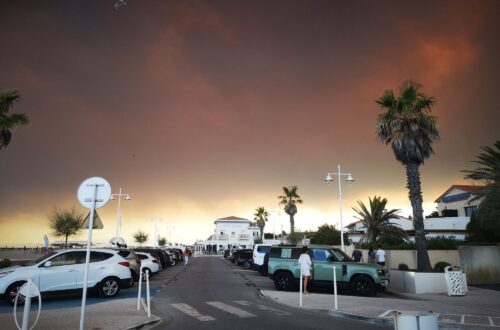
Yesterday, where I live in France, there was a veil of mist all day and, as the wind was blowing up from Spain, we thought it was heat haze which often occurs. It turns out that it was an effect of the dramatic wildfires in Canada which have so far burnt a phenomenal 8 million acres of land. This is awful news which makes a sad contribution to our war-torn contemporary world. However, the good news, according to the Weather Channel, is that while Canada continues coughing from the wildfire smoke, the residue we observed in Europe yesterday was travelling at such high altitude that there was no direct health hazard. Today the skies here are clear again, yet I can’t help remembering an even more dramatic event from 2010 when a volcano erupted in Iceland.
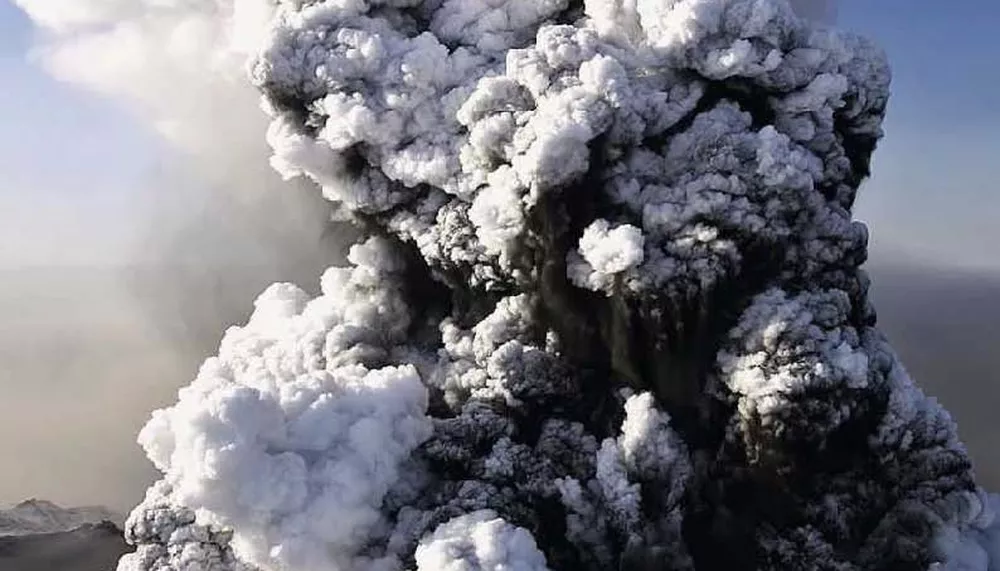
It was the volcano with the famously unpronounceable name of Eyjafjallajökull and the eruption was so violent that the ash plume went directly into the jet stream, carrying it straight into European airspace, creating dangerous conditions which grounded a total of 95,000 flights between April 16 and 21, 2010.1
10 years before COVID lockdown, this sudden massive halt to air travel in Europe was a full dress rehearsal for a global mobility shutdown. Fewer people were cast for the volcanic blockbuster than the pandemic peplum, but it did bring them to a complete standstill with no alternative than to wait it out.
Somewhere, I remembered, there was a text I had written at the time. And yesterday’s Canadian wildfire influenced weather made me want to dig it out. Here it is.
EYE AWFUL – EYJAFJÖLL
The glacier sat on the volcano
Turning time and travel on their heads,
Disembarked before boarding
For the land with the long tradition
Of great tales spun from simple starts,
Narrative ever lurking.
The badly told bedtime story
Which would hold the world wingless,
Awake, worried and waiting.
Not the saga this time but the unsaga.
Events frozen before the hero began,
Wintered without warning.
Eye-awful as unwilling unthoughts
Fought to fathom a way through the ash
From this cloud of ungoing.
Icelandic sagas tell of love triangles, blood feuds, and heroes who go off and do things to avenge or defend their families or communities. A saga is not just a catalogue of feats of combat in a world full of fantastic creatures and mysterious weapons, it can also tell the story of an individual’s inner journey which requires the protagonist to find the courage to act against all odds.2
In comparison to the effect of COVID lockdown, the Eyjafjallajökull incident may seem a mere trifle. In Old Norse, the source-language for the Scandinavian world including Iceland, the word for this sort of trifle or insignificant event is skrap. In modern English, this has given us the word scrap, made globally famous thanks to the word scrapbook. The poem I’ve called Eye-awful is one such scrap, the leftover from a brief tale of ungoing where so many missions became impossible as their heroes found themselves stranded. One more for the scrapbook.
- The Wikipedia page on Air travel disruption after the 2010 Eyjafjallajökull eruption gives more details. ↩︎
- You can find out more about sagas on the friendly website called The Icelandic Sagas for Beginners. ↩︎
Discover more from GERRY THE KENNY
Subscribe to get the latest posts sent to your email.



2 Comments
Pingback:
Pingback: