In June, I posted a piece which mentioned wildfires in Canada this summer which created smoke haze in Europe. It reminded me of the eye-awful effect of the eruption of an Icelandic volcano in 2010.
You can read the article here : Eyjafjöll : the unsaga of an eye-awful eruption
I hadn’t suspected that there would be not just one but three major forest fires in the area of France where I live in July and August. The last and biggest of these started on August 5th, which by coincidence was also my late father’s birthday. This time there was nobody to blow out the candles on the cake. And nobody really wanted a piece of what was happening.
I was at the beach in Leucate for a family afternoon when, at around 4pm, the sky began to change colour. Darker and darker, first taking the heat off the sun but then, in the space of less than an hour, stealing the light. It reminded me of a solar eclipse. People were still at the beach but the sky was no longer blue.
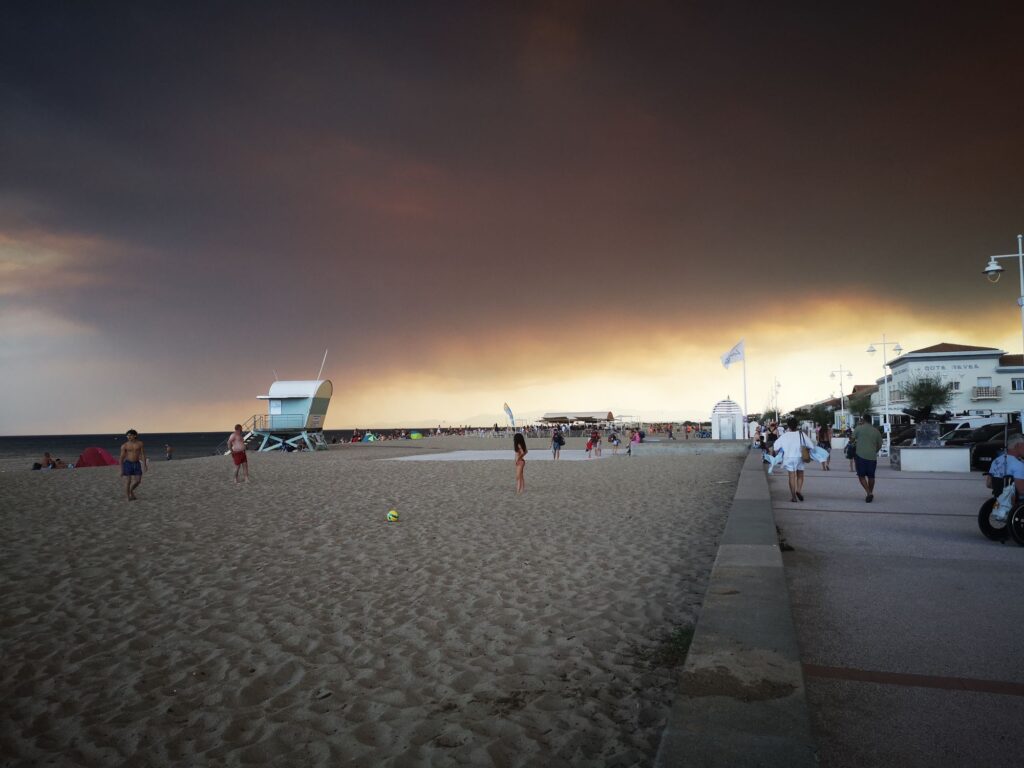
I took a picture of the effect of what would the BBC would soon call France’s biggest wildfire for 75 years, covering an area larger than Paris. We went home. The air was smoky, but we were 40 kms from the fire zone and this distance would be reassuring, even when the campsite in La Palme was evacuated 10 kms away. The next day in Leucate there was ash everywhere : on the windowsill, on the steps, in the streets, on the beach, in the sea. It was only this weekend, at the end of August, that the fire was officially declared over : 17,000 hectares and 23 days later.
End of story or just another episode in a continuing blood-freezing saga of the great climate crisis? Because, even though the investigation into the causes of this fire suggest criminal intent, the pyromaniac was only able to set the landscape ablaze because of exceptionally dry conditions created by a long, cruel drought.
This post is part of a series which can be found in Orality and Storytelling. Subscribe for updates on new posts.
Discover more from GERRY THE KENNY
Subscribe to get the latest posts sent to your email.