Language and the blanket drawn about dreaming shoulders
We think of our first language as a given, something which is there, unlooked for.
Families influence the acquisition of mother tongue by connecting it to contexts where, as children, we learn to spot when to express and when to keep things to ourselves. Those things don’t go away. This long language-learning conversation is rather like sitting round a table. But the table doesn’t have to be real for the effects of being there to be real enough to stay with us long after we move from home and make homes of our own.
Alongside family life, there is also friendship. This starts when we are young and, hopefully, continues down the years. Some friendships are connected to specific times and places and are eclipsed by others as we all move on. Other friendships are more enduring, with friends who become as close, or even closer than our own genetic family.
Friends bring something different to the table, a playfulness of sorts, an invitation to explore elsewhere, which takes us out of ourselves as we are in our family. We develop different aspects of ourselves and often get the chance to unlock and release those things we didn’t say or couldn’t say around the family table, often for the first time. And with each friendship, comes a new language.
Threadbare
There is no end to the harm that silence can do
When you are sitting there hunched over a hot plate,
Scooping food into inner intestinal space,
Never speaking with your mouthful, heaven forbid.
Even filling your face calmly to stop up speech,
Eating like a war victim receiving relief,
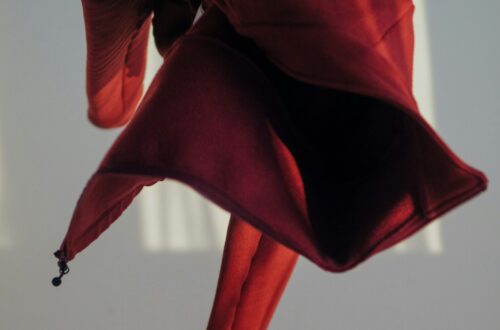
Drawing the blanket about your dreaming shoulders,
Not admitting this is a nuclear test site
Where careful hands have buried all the evidence.
But when the meal is done and plates are cleared away
You are left stuck at the table, and all you have
Are a knife and fork. So you set about carving
A web of acute angles, there in front of you.
Until an obscure geometry emerges,
Forms that you cannot uncarve or varnish over –
The rough and tumble of your original state
Before discreet table manners tempered your steel
With the veneer of well-being the food flattered.
A bright little chap till I gagged my sentences,
Sating with food any need to speak out of turn.
Anxiety was hushed by that full-up feeling
As eating actually served to nourish silence.
Until you saw my table-top interstices
And took time to help me reveal my submersion,
With a tear which did not rhyme with here, but with there,
Together finding new words for old which we strung,
Threadbare and makeshift, across the knees of language.
When familiar things get a different name the world is new
Meeting people, foreigners from outside our families, changes the menu. Among these foreigners, these outsiders, people we objectively hardly know, some can feel strangely more familiar than people we’ve lived with for much longer. We may have grown up at different tables, with different words for the world, but when with friends there is something more than verbal which brings us together.

We compare our family mythologies and discover that the blankets each of us has been given to put around our dreaming shoulders are not all there is. We sense a mutual need to share, and the best way to do it is by creating a new web of words which we weave together and stretch across the knees of language – giving each other encouragement, helping each other to be ourselves at last.
Where friendship begins, comes the need to make the foreign familiar by creating a common a language in which familiar things get a different name. We discover a whole new way of looking at the world.
Families of whatever sort are where we start in life, but we have to look beyond them if we want to continue to grow. I say : Long live friendship and the new language each one brings with it. And I’ll go further : in the long term, for good relationships with family members, kinship alone is not enough, we also need to make friends with our family.
That’s my blanket statement for today. I hope it is also valid for you.
Still want more?
This contrast between language the foreign or familiar is something I have also explored in a piece on how we percieve our mother tongue when we live in a foreign language called English – familiar or foreign language ?
In two more recent pieces, I have also stumbled on the idea of how navigating between native and foreign versions of ourselves we can make unexpected discoveries.
One article focuses on how we become indefinitely multiple as we move around the world, living in different places or simply travelling.
The other article points to our new place in a world where applications on our mobile phone seem to know where we are but never who we are. It asks what happens when we start looking for the map of ourselves.
Discover more from GERRY THE KENNY
Subscribe to get the latest posts sent to your email.

You May Also Like

Foreign is such a strange word
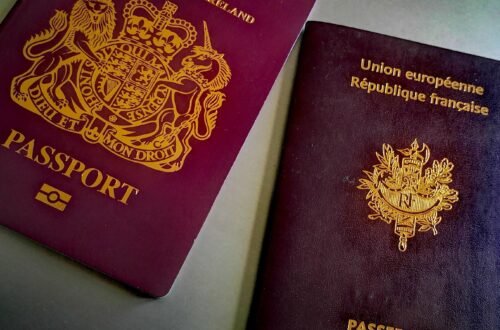
Going to Britain? Discover the new travel legislation