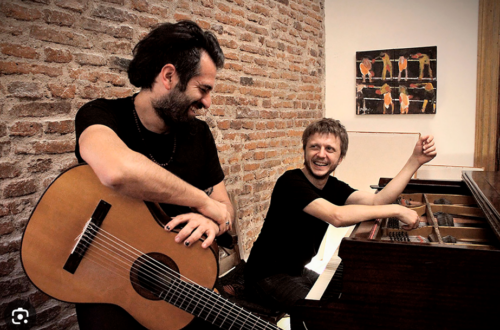
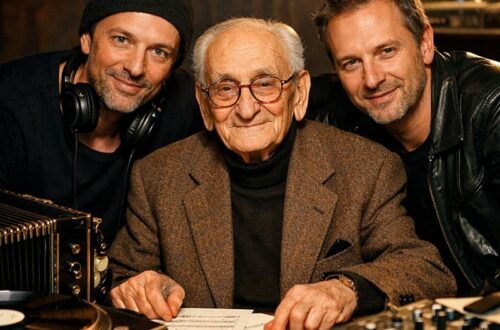
The final story behind the remix of Chunga’s Revenge
This is the final post in a series of five exploring the stories behind the famous names mentioned in the lyrics to Chunga’s Revenge, a song released by Gotan Project on their debut album La Revancha del Tango in October 2001.
Learning to DJ tango – then came Gotan Project
When I first heard the album as a new release, I was having fun in my spare time learning to be a tango DJ in France, listening to tango all the time, memorising dates, titles, orchestras, and styles and always on the look-out for new music to surprise dancers with. At the time, new music was generally in the form of digital reissues of tango classics : either music remastered from original shellac 78s from the 1930s to the 1950s, or stuff which had been digitised from vinyl LPs spanning from the 1950s on. 1
Along with these classics, I also tried to play a selection of danceable tunes from contemporary tango orchestras who were then bringing out their work directly on new CDs.
Then came Gotan Project, starting an electro tango wave along with Narcotango, and later Bajofondo. Gotan was not traditional tango, but sampled sounds and phrasings from tango and flolkoric traditions from Argentina and Uruguay and incorporated them into an electronic musical environment. I realised that playing a track or two from artists like these at the right time in an evening milonga could create a different energy on the dancefloor, away from music of the past and into music of the present. It was tango in a new form plugged into electro and, in Europe at least, dancers more familiar with tunes from the Golden Age were often willing to follow – as long as it was only occasional.
In the world outside the tango clubs in France, Gotan Project also began to gain in popularity. They began to tour, appear on TV, and grow an international fanbase. People who didn’t know much about tango liked their music – the plumber who came to service our heating mentioned it, our neighbours played the CD with the windows open. All of this turned that debut album into a million-seller. Gotan became the new ambient music2. It had a groove to it which made it easy to listen to, inducing a pleasant dance-like sway in people who’d never been anywhere near tango evening.
Chunga’s Revenge was different
But there was one track on that debut album which fascinated me. Chunga’s Revenge was different. Frank Zappa, the original composer, had nothing to do with tango. The lyrics added to this new version were intriguing for those with ears to hear. They mentioned famous names I knew from tango, like Anibal Troilo, Astor Piazzolla and Osvaldo Pugliese, alongside people who were still famous unknowns to me, including dub-master Mad Professor and the electro duo Kruder & Dorfmeister. What was the connection? I would have to wait until 2004 when, reading liner notes on a DJ Set released by Philippe Cohen Solal, one of the group’s founders. He pointed out that, with Gotan Project, you discover a sudden proximity among artists who didn’t know how close they were to each other. 3
Chunga’s Revenge appeared as the closest thing to a title track on the album because it was the source of the expression la revancha del tango. Here’s a reminder of the song and the lyrics.
VERSE 1
Philippe, Christophe, Eduardo
Nini, Cristina, Gustavo
Edi, Line, Fabrizio
Es la revancha del tango

VERSE 2
Piazzolla, Troilo, Cugat
Mad Professor, Zappa
Kruder, Dorfmeister, Pugliese
Es la revancha del tango
BRIDGE
Thievery Corporation
Castillo, Castillo


VERSE 3
Ana, Miguel, María
Noela, Mark, Rubén
Prisca, Arnold, Carlos
      Es la revancha del tango
By presenting the members of Gotan Project (Verse 1), then listing a mix of the influences behind the music including figures from such genres as tango, dub, jazz rock, trip-hop, downbeat, and downtempo (Verse 2 and Bridge), the song clearly claimed that this electro remodelling of tango was intended to wreak vengeance – la revancha del tango – on all those who had announced that tango was dead and buried, by showing that it was still alive and kicking and ready for new adventures in the new century.
You can read about the people behind the names from verses 1 and 2 here. To finish this series, today it’s time to look at the two artists mentioned in the song’s bridge4 : Thievery Corporation and Alberto Castillo.
Ladies and gentlemen, it’s time for a little tango.
Alberto Castillo, an unmistakeable tango voice
Alberto Castillo is one of the major singers in the history of tango who became popular in the Buenos Aires of the 1940s and 50s. He brought not only a faultless voice and an immediately identifiable singing style with him, but also a certain streetwiseness, along with an ability to capture an audience and look them in the eye which would help him later extend his career into film. The following performance of the classic El Choclo from Por cuatro dias locos is a taste of Castillo in action.
Things started out very differently for the man born Alberto Salvador De Lucca, in Buenos Aires in 1914. He grew up in a family of hard-working middle-class Italian immigrants who saw their son becoming a doctor even when he was still a boy. But Alberto was also a born musician, who not only learnt to play the violin, but also had a natural singing voice which he would happily use on any occasion to the delight of friends and family.
His singing talent gradually gave him the chance to perform on occasion for paying audiences in tango clubs. He got a first chance with Augusto Berto (1935), a respected musician from the previous generation, but someone at the end of his career. Castillo was also connected for a while with the orchestra led by Mariano Rodas (1937) but, for various reasons, things never quite worked out. Would he have to study medicine after all?
Finally giving in to family pressure in 1938, Alberto agreed to stop singing and devoted the next 4 years to becoming a doctor. This can’t have been easy for a young man in love with tango at a time when Buenos Aires was buzzing with clubs and orchestras, and new tangos were being composed and recorded week after week.
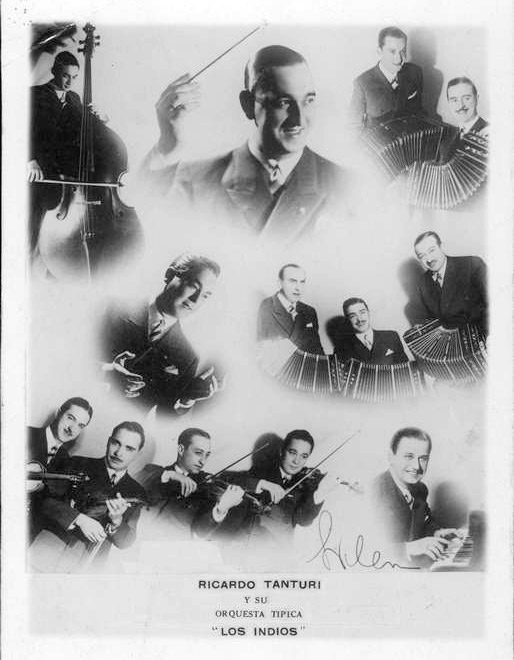
Alberto Castillo c. left
Photo Lantower Records
Finally qualifying as Dr De Lucca the gynecologist, and opening a surgery in the family home, perhaps he had satisfied his parents’ aspirations for him, but he hadn’t given up tango altogether. In fact, under cover of the stage-name Alberto Castillo, he had also become lead singer with Ricardo Tanturi & Los Indios.
Listen to the irresisitibly danceable tango La Vida Es Corta, one of his very first recordings with Tanturi from 1941, to hear the voice which would become such an important ingredient in the orchestra’s rise to success. Castillo’s singing embellishes the orchestra’s rhythm and energy with inflexions which seem to invite dancers to forget the orchestra and simply follow his voice, always in tempo. And that is just one recording.
Alberto Castillo‘s arrival as a popular artist was also a result of good timing, as Héctor Ángel Benedetti explains. 5 The tango singer’s role changed at the beginning of the 1940s. Until then, they only got to sing a whole tango if they were solo stars in their own right like Carlos Gardel had been. Otherwise, since the mid-30s, any singer with a dance orchestra in Buenos Aires made only very brief appearances in each piece, usually singing the first verse and chorus after the instrumental introduction, then repeating the chorus once or twice following solo instrumental breaks before the end of the tango.
Gradually, according to Benedetti, with the arrival of people such as Hector Maure, Alberto Marino, Ángel Vargas and Floreal Ruiz, all of whom had voices along with a strong personality of their own, singers began to come out from where they had been hiding beside the piano to perform centre stage. They didn’t necessarily sing more, but they were allowed to take the spotlight.
Over an intense two-year period, Alberto Castillo‘s unmistakeable voice became the trademark of Ricardo Tanturi‘s orchestra, and they created a catalogue of nearly 40 songs together, songs which are still popular feetwarmers with tango dancers today. To get an idea of Castillo‘s art, compare performances of the same tango by Ángel Vargas and Alberto Castillo to see the personal enrichments he makes to each line.
When performing live, Castillo exploited the microphone, not only for amplification but as a prop to add visual emphasis to his singing. Jorge Gôttling6 points out that he was also famous for his ability to talk to an audience between numbers, mixing humour and sentimentality with a touch of jokey innuendo. This night-time show-within-the-show further attracted a considerable female following of fans, who then also flocked to Dr De Lucca‘s gynecologist’s day-time surgery for autographs and appointments – something which troubled Alberto who felt he was doing a disservice to the dignity of his profession. He would ultimately close his medical practice altogether.
Of course, while all of this gave the singer and the orchestra a reputation, it made every performance a noisy event, drawing crowds and often provoking trouble. Club-owners didn’t like having to call in the heavies or the police to restore order, and they told Tanturi to get Castillo to change his stage manner and just stick to singing. Castillo disagreed and so, at the height of their success, Ricardo and Alberto went their separate ways, embarking on new projects, each attempting to build on what they had created together.
Castillo singing with his own orchestra
Tanturi recruited Enrique Campos as the new lead singer, and Castillo went on to create a popular orchestra of his own, with violinist-bandoneonist Emilio Balcarce as composer, arranger and director.
Now able to choose his own repertoire, in 1944 Alberto Castillo recorded Charol, a song in the candombe rhythm which would be the first of a long series which he would make throughout his career. What may seem natural to tango dancers today was highly innovative at a time when the candombe was still a well-kept secret. This makes the effortless mastery of Castillo‘s performance all the more remarkable.
The late 1940s and the 1950s would also see the singer make a whole series of films. You will find his filmography here and you just need to click on any poster to learn more about the film in question.
Since this post is part of a series on Gotan Project, let’s mention one film in particular which can be seen to have a Gotan connection. Castillo plays a star-role in El tango vuelve a Paris (1948), a title which translates as The tango returns to Paris, which sounds like another way of saying La revancha del tango to me.
The action takes place in Paris and Castillo is an Argentine doctor – does that sound familiar? – who finds his true identity as the singer with a tango orchestra led by somebody also mentioned by Gotan Project in Chunga’s Revenge : bandoneon player Anibal Troilo7. The film is a light fiction with plenty of songs at a time when tango was sufficiently popular for investment as one of numerous full-length feature films.
By referencing Alberto Castillo in Chunga’s Revenge, Gotan Project were paying tribute to a tango legend who gave his last concerts in 2001 at the age of 87, the year Gotan Project released their debut album. It had been a busy year for him and, returning from a tour in Uruguay, the land of candombe, he gave his final public performance at the famous Torquato Tasso club in Buenos Aires on 28 December.8
Lest we forget, our focus on Alberto Castillo here comes from his being mentioned by Gotan Project in their cover of Chunga’s Revenge. Hearing Castillo coupled with Thievery Corporation was unexpected because, while Alberto is clearly tango, Thievery are just as clearly electro. I tried to find out more and, as they say in electro circles, here’s a sample of what I found.
Thievery Corporation, creators of outer-national music
I first came across the American electro duo Thievery Corporation with the song Tomorrow on a compilation CD issued free along with an edition of the French music monthly Les Inrockuptibles in March 2000.9 I later also became particularly enamoured of the beautiful Brazilian voice on the Thievery remix of Astrud Gilberto’s Who needs forever?, playing it for years as a cortina during tango evenings.
Master samplers Rob Garza and Eric Hilton, two DJ musicians from Washington DC, were the creative force behind Thievery Corporation.
The group’s provocative name suggested robbery as a business run by a corporation of thieves which Rob Garza described in 2024 as a bit of a tongue-in-cheek commentary about the seedy corporate world and its sometimes questionable practices …. Something which reflected our rebellious spirit while acknowledging our love of sampling.
The process of sampling is a tradition as old as music itself. It was particularly popular among jazz musicians in the early 20th-century who would drop something from another song in the middle of a live performance :
This was, of course, done out of respect and admiration for the composer as a sort of homage. This “borrowing” of bits of music became a popular practice and kind of an “inside joke” between the musicians. It was a “crowd-pleaser” and added more fun to live jazz events.10
Thievery Corporation did more than just quote, they used samples as building-blocks. As creatives who had come through the various phases of analog and digital recording equipment, they learnt to sample specific sounds or patterns from music they heard by others, re-using and re-shaping these borrowings to build tracks of their own. Gotan Project themselves were also samplers : they used a short 49-second sample from Frank Zappa‘s 6-minute original Chunga’s Revenge to make their own version of the song. Unsurprisingly, as an informative history on the subject from the Lucid Samples website explains, music sampling has been crucial to the development of all forms of electronic dance music, taking them from obscure underground movements to global cultural phenomena.
While Thievery Corporation admitted openly to pillaging from songs they like to make songs of their own, Rob Garza and Eric Hilton claim themselves to be “thieves of sounds and not of ideas”. Even today, their working principle involves building a song from accumulations of electronic sounds and effects along with music played live by members of the group. Eric Hilton explains that they establish an idea for a basic track and then they “throw personnel at the situation“, exploring what live musicians can add.
Thievery Corporation have a lot in common with Gotan Project – a love of chill-out and downbeat or downtempo styles, a love of samples to which they add layered sounds to create music with mood rather than melody. They also share a love of female vocalists : Cristina Villalonga‘s work with Gotan Project is clearly comparable to Natalia Clavier‘s performances with Thievery Corporation, even though both groups have also worked with male guest vocalists.
While Gotan Project used Spanish and looked to Argentina and Uruguay to create their mix, Garza and Hilton have constantly created their own sound with flavours taken from Carribean, Brazilian, Portuguese and Indian music, using lyrics in several different languages in what they call “outer-national” music.11
Connecting Castillo and Thievery Corporation
At first hearing, Alberto Castillo from Buenos Aires and Thievery Corporation from Washington DC would seem to be worlds apart. But there are connections.
Both are products of the life and musical cultures in the capital cities of their respective home-countries. They have in common an intial impression of smoothness to their style – Castillo‘s marvellous voice, Thievery‘s cool sound – but when you scratch the surface there is a rebellious spirit to both. Castillo abandoned a career in medicine to become a tango singer who loved creating a little charming trouble in his live performances. The name Thievery Corporation is a poke at the dark dealings of the corporate world and there is also a political vein to their work which I haven’t developed, but which you can read about here.
One other significant feature they share is an ability to develop their own style by borrowing from other musical sources. Thievery Corporation made sampling from other people’s music from all over the world their trademark, introducing fans to unusual styles they would never otherwise have heard, while Castillo‘s capacity to look beyond tango towards candombe enabled him to shine a light on a little-known musical genre in the 1940s which continues to enrich tango even today, and which he would continue to promote all his life while always respecting and also collaborating with musicians close to its original source.
Finally, both Alberto Castillo and Thievery Corporation, each in their own ways, can be proud of long and varied careers. The tango legend sang for 60 years, while the electro duo started in 1995 and, over 30 years later, are still recording and performing. Thanks again to Gotan Project for making this unexpected connection in Chunga’s Revenge!
Still want more?
This is the end of a series which has been a chance to talk tango to people who know about electro, and explore electro with people who are mainly mad for tango. I originally published the single source article on World Tango Day, 11 December 2025. It is called Les Secrets de Chunga’s Revenge de Gotan Project and is in French, which is the other language of this blog. It was only once I began to work on the English version that I realised how much more there was to say, and the intial single article turned into five separate episodes. Click here for the full series in English.
More coming in The Musical Box soon. Please subscribe to the newsletter to stay up to date on new posts.
Notes
- An interesting piece by Gregory Diaz on saving lost tangos is available on the great El Recodo website. ↩︎
- More on ambient and electro’s muzak connections in Gotan Project featuring Osvaldo Pugliese and … Kruder & Dorfmeister. ↩︎
- Quoted from the liner notes to Inspiracion Espiracion, Gotan Project, 2004. ↩︎
- According to the Song Academy website : In music, a bridge is a part of the song that provides a break from the usual pattern of verses and choruses. It takes you somewhere new before bringing you back to the familiar chorus or verse. Sometimes it’s a change in melody, rhythm, or both. ↩︎
- Siguiendo a Castillo los bailarines dibujaban sobre el piso (Following Castillo, the dancers drew on the floor), Tango de Colección #10, Alberto Castillo, Clarin, 2005. ↩︎
- Un idolo del 40 que se proyecto en el tiempo (An idol of the 40s who projected himself through time), Tango de Colección #10, Alberto Castillo, Clarin, 2005. ↩︎
- Much more on Anibal Troilo in Astor Piazzolla, Anibal Troilo and Xavier Cugat in a Gotan Project remix. ↩︎
- Castillo died the following year. ↩︎
- The English Wikipedia page tells the Inrockuptibles story. ↩︎
- From A Brief History of Sampling by Joe on the Thomann web page. ↩︎
- Rob Varza : “I would say it’s almost like “outer-national”: transcending nationality and stretching beyond borders.” Source Interview Magazine, 2011. I like this neologism which sounds like they sampled the word international … and came up with outernational ! ↩︎
Discover more from GERRY THE KENNY
Subscribe to get the latest posts sent to your email.