-
Going against the flow : faces in the crowd
Crowds can make us feel safe and give us a sense of belonging, but they can also make us feel uncomfortable and leave us dreaming of a space of our own. The same can be said of life online, where the invitation to click or share to show our approval or dispproval as one of the crowd is so difficult to resist. But how do we percieve somebody who breaks free from a crowd of whatever sort and takes their own path? A street photo by Alejandro Diez invites us to explore precisely that question.
-
Teenage student voices as part of a live news programme in class
We all know someone who doesn't like the sound of their own voice, and sometimes that someone is us. But what if the whole class works together on the recording of a live news programme with the teacher as presenter? Here is an example of a collaborative oral production which is engaging, challenging and gives everyone a chance to raise their voice.
-
Why hearing your own voice is like looking at a selfie
If you don't like the sound of your own voice on a recording, that's because it's not the voice you hear when you speak. This article invites you to think of it as an audio-selfie : you can spend as long as you like wondering who is in a photo you've just taken of yourself which doesn't look right, it's definitely you. Time to take a listen in the mirror for a closer look at your voice.
-
Songsmith And Beach Boy Brian Wilson Gone But In Good Company
For a long time I saw The Beach Boys as a formula, a brand name and verrrry American, I thought. Which indeed they were : toothpaste smiles, sunshine lyrics and good times almost too good to be true. That would change in late 1975 thanks to Robin, a friend at Keele University. I was a music enthusiast at the time, but Robin was a music fan who was also a musician and totally unafraid of liking music which others considered too pop to be of interest. He knew what he liked, and he could tell you why it was good. He took me into the world of "Surf's Up" and…
-
Eyjafjöll : the unsaga of an eye-awful eruption
Wildfires in Canada created smoke haze in Europe recently. But who remembers the eye-awful effect of the eruption of an Icelandic volcano in 2010?
-
Words tripping off the tongue
Panicky about speaking in public or for an exam? If not, you probably know somebody who is. If you teach, ask people you have in class why public speaking, or simply oral expression, is so difficult for them. I did. They didn't mention fluency or accuracy. They said : "I don't like my voice." They said : "I am afraid of speaking in public." How can we use comments like these to create new teaching options? Let's help learners find a new connection with oral expression.
-
Still blowin’ and still rollin’
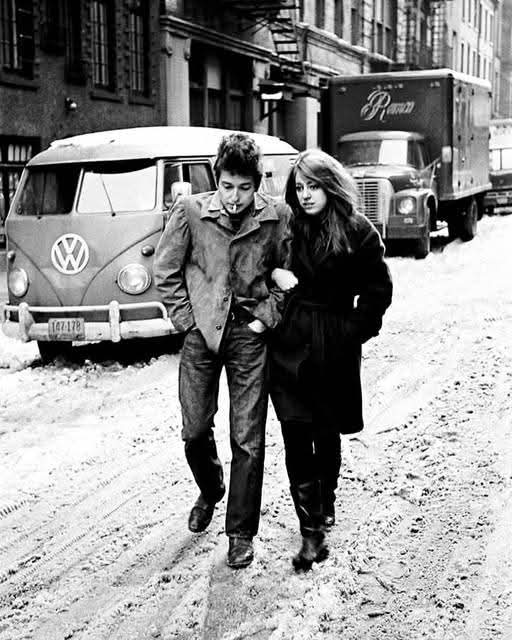
The young guy in the picture with his girlfriend Suze is 84 years old today. Happy birthday, Mr Dylan. Still blowin' and still rollin'!
-
English father tongue
So what sort of English did Ken, our dad, speak and where did it come from? There are things I can see now that were invisible when I was growing up. Particularly, that there were multiple Irish undertones to it all. He didn't speak foreign languages but he had a good ear and an ability to tune in to the language being spoken around him that was uncanny. A language chameleon.
-
English mother tongue
I have been teaching my mother tongue as a foreign language most of my life. But what sort of English did my mother speak and what was the language-model she encountered at home and at school? How did she become a so accent aware? And where did she learn to be such a stickler for linguistic accuracy?
-
Spring clean
We have been doing a Spring-clean on the blog and the new version is ready. Easier to read and to use.