The Great Fire of London revisited
When Samuel Pepys sat down to complete the page for September 2, 1666, in the diary he had been keeping assiduously every day since January 1, 1660, it had been an unusual day. It would be the first of several, lasting until late on September 5 as London burnt in what we now call the Great Fire of London which would destroy 13,200 houses leaving 100,000 people homeless, while also engulfing 87 parish churches, The Royal Exchange, Guildhall and St. Paul’s Cathedral.
Long hot summer of 1666 comes full circle in 2026
This year we commemorate the 360th anniversary of the Great Fire of London. Weather-wise, something has come full circle. Since May, our European summer of 2026, with its historic series of heatwaves, has borne an uncanny resemblance to the summer of 1666 which was also swelteringly hot with virtually no rain.
According the Weather Web History site for September 1666, it had been a dry year since the previous November in a city full of mainly multi-storied wooden constructions with thatched roofing, making London highly inflammable. A fire in a baker’s shop on September 2 which could have been dealt with simply enough, fanned by a strong easterly wind, would ultimately create a blaze which went rapidly out of control. Fortunately, it stayed north of the River Thames as London Bridge had been destroyed in 1633 … by an earlier fire.
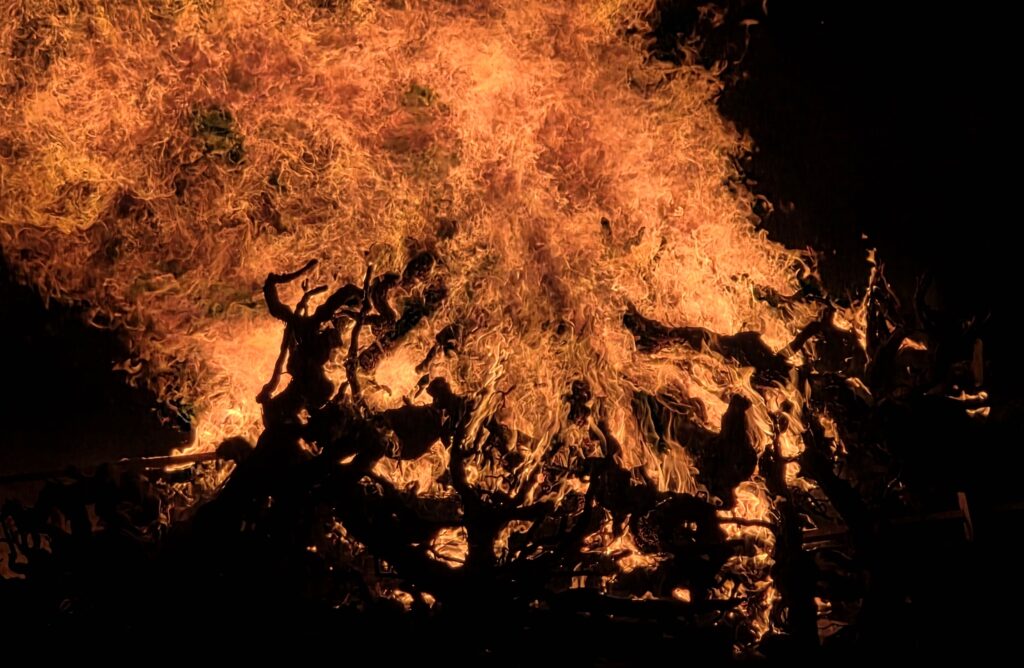
That certainly sounds like summer 2026 in Europe. Our towns and cities are no longer wood-based, of course, but our forests certainly are. The extreme heat, drought and wind combined have meant that a spark from a machine or a cigarette end tossed (accidentally or not) onto dry vegetation have led to a series of frightening forest fires for the second year running.1
In France, Spain, Belgium and Greece these have been genuine wildfires, some powerful enough to create their own firestorms : conflagrations which attain such intensity that they create and sustain their own wind system.
There were firestorms in the Great Fire of London too, with hurricane force winds feeding the 100-foot blaze creating lightning at its crown. In the end, firebreaks would be the only way to stop the fire spreading to the entire city. In 2026, we certainly have the land-clearing machinery to create breaks in vegetation to create firebreaks to stop or to prevent our forest wildfires but, even with all our technology and know-how, it is no simple task to stop a fire, as the 300,000 hectares of forest burned in Spain this year prove – that figure is 211% above average.
In 17th-century London, where fires were common enough, a stock of fire-hooks had been placed around the city to to pull down neighbouring houses ahead of any fire, along with leather buckets and water-squirts. However, in September 1666, the fire spread too quickly for them to be put to active use quickly. Which houses to pull down? Would the owners give permission? What if the fire just moves too quickly and burns through firebreaks before the houses can be cleared? In fact, it would take explosives set off by the garrison of the Tower of London four days later to finally do the job sufficiently well to end the inferno. And just in case you wondered, yes, fire-hooks are still used by fire-fighters today.
Pepys, the fanatical Navy Board fact-checker turns daily reporter in his diary
The pages on the Great Fire of London from Samuel Pepys’ diary are the most famous example of numerous events which he recorded about the world around him over the 10 years the diary lasted. He also wrote generally about things he did and saw. Who was he?
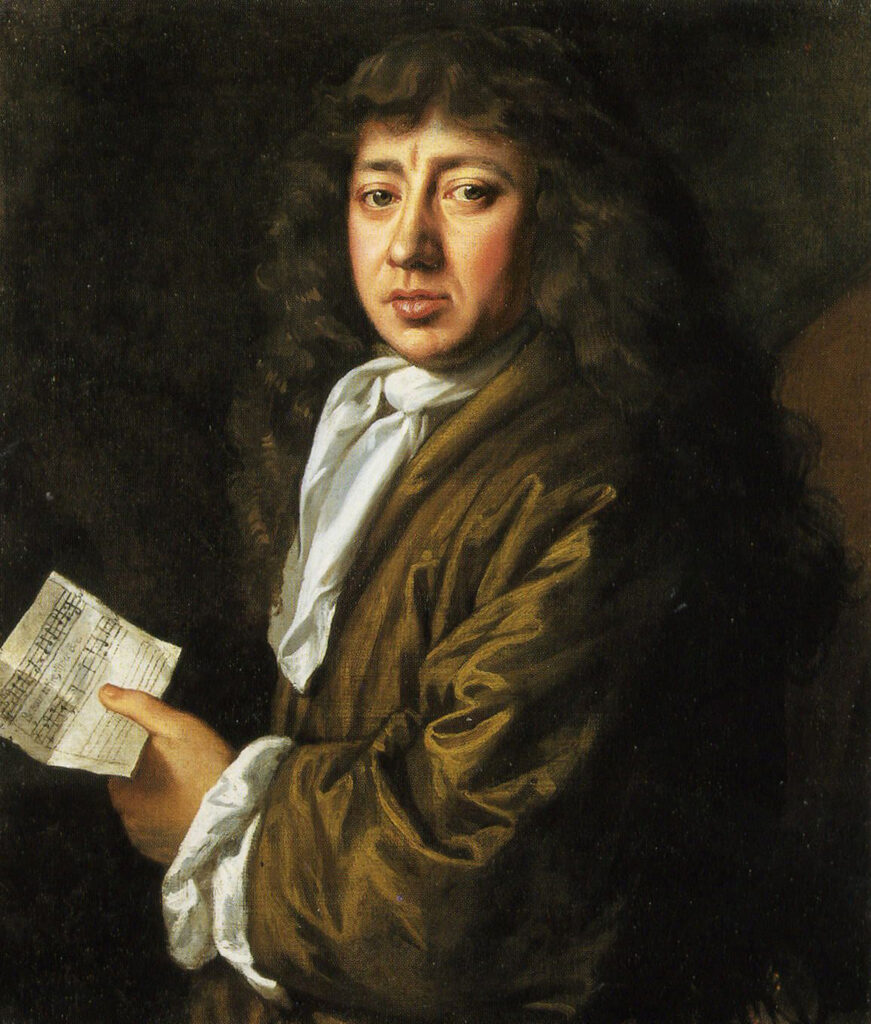
He was born in 1633 and would grow up to the bluster of English Civil Wars between Parliamentary and Royalist armies. He was 15 years old when he witnessed the execution of King Charles I in January 1649 and lived through the Puritan years of the Commonwealth of England embodied in the regime led by Oliver Cromwell. Young Sam learnt that if a king could be executed, anything was possible, and vigilance was the key to survival.
He became a diligent, hard-working and ambitious civil servant who, following the Restoration of the Monarchy in 1660, began long years as Clerk of the Acts for the Navy Board responsible for structuring and professionalising the English Navy which was in serious need of reform.
His familiar world was one of written correspondance concerning the organisation and operations of fleets of ships. He was a fanatical fact-checker and information-sharer who had to be constantly careful about the correctness of what he did and said. The keen eye and love of detail which heped him succeed professionally also made him an exceptional observer of his times in the personal project of his justly celebrated diary.
Wake-up call for a sign-reader
For proof of that, take a brief look at how he begins his account of the first few hours of Great Fire of London. He attempts to read the signs of what is occurring as it happens and before it turns into something else.
He was first alerted to the fire in the early hours of Sunday September 2nd by Jane, one of his maids, at about three in the morning, to tell us of a great fire they saw in the City. 2 He tells us that he got up, went to Jane’s window and looked out : I thought it far enough off; and so went to bed again and to sleep. He finally got up at seven, checked the fire from the window, but it still seemed distant so he began his day : By and by Jane comes and tells me that she hears that above 300 houses have been burned down to-night by the fire we saw, and that it is now burning down all Fish-street, by London Bridge.
News travels fast by word of mouth, and its importance to Samuel the narrator here is testified by the switch to present-tense free direct speech as he reports the immediateness of what Jane said. Let’s do the same ourselves and switch to present tense, because something is clearly amiss and the sign-reader in Pepys has to know more.
We follow him onto the streets and his report unfolds. Needing to get a better view of the situation, Pepys walks to the Tower of London and – taking a young boy along with him to show the lad what is happening – climbs the stairs to where he can see the infinite great fire for himself. Worried, he climbs down again and, with my heart full of trouble, to the Lieutenant of the Tower – Sir John Robinson, the little boy’s father, but also former Lord Mayor of London – who tells me that it begun this morning in the King’s baker’s house in Pudding Lane. The news is well-sourced, so now we and he all know where it all started.
From here, Pepys goes down to the waterside and takes a boat to get another look at the lamentable fire already burning houses of people and places he knows. On returning ashore, he sees Londoners running to the river to put their possessions on boats any way they can but, his eye ever on the details, he also notices birds in distress : And among other things, the poor pigeons, I perceive, were loth to leave their houses, but hovered about the windows and balconys till they were, some of them burned, their wings, and fell down.
After an hour of accumulating these observations, our diarist seizes the fact that, while people are saving themselves and their goods, this is not stopping the fire from spreading. He decides to share this information with the authorities and travels upriver with one of the verbless sentence which are typical of his diary : I to White Hall. But even on this short trip he is not alone, but in conversation with a gentleman with me who desired to go off from the Tower, to see the fire, in my boat.
Reaching Whitehall, which is the royal residence at the time, he passes on what he has seen : People come about me, and I did give them an account dismayed them all, and word was carried in to the King. So I was called for, and did tell the King and Duke of Yorke what I saw, and that unless his Majesty did command houses to be pulled down nothing could stop the fire.
If the probability of this conversation seems slim today, not so then. Pepys is known to King Charles II whom he has met on several occasions – not the least of which was when he was secretary to the commander of the expedition to Holland bringing Charles back from exile for the Restoration of the Monarchy as his diary attests earlier.
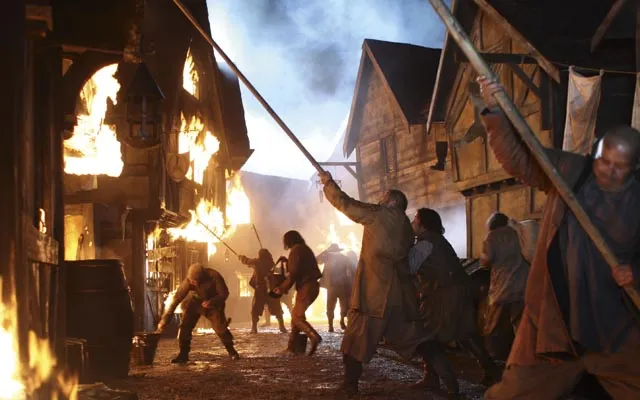
Together they talk of pulling houses down to stop the fire, but amid the panic,sending orders to set up a firebreak is no easy matter. Where will they find the hands they need ? They seemed much troubled, and the King commanded me to go to my Lord Mayor from him, and command him to spare no houses, but to pull down before the fire every way.
When Pepys finally finds the Lord Mayor, Sir Thomas Bludworth, in the street, he perceives a man who has given everything he can do trying to stop the fire : like a man spent, with a handkercher about his neck. To the King’s message he cried, like a fainting woman, “Lord! what can I do? I am spent: people will not obey me.” The man is clearly overwhelmed and exhausted by the impossible nature of his task and explains : “I have been pulling down houses; but the fire overtakes us faster than we can do it.” He concludes by telling Pepys that he needed no more soldiers; and that, for himself, he must go and refresh himself, having been up all night. It is now late morning according to the diary and the two men leave each other as the fire rages on : So he left me, and I him, and walked home, seeing people all almost distracted, and no manner of means used to quench the fire.
And so it goes on, like the pitch for a film or the pilot episode of a new series. But who was Pepys writing for? That’s the curious part.
Diary in a secret language
As mentioned earlier, the diary was a personal project for an administrator whose every written document was for other eyes to see. Here, however, he wrote only for himself, even though he ensured that the six resulting volumes would be in safe keeping by bequeathing them as part of the considerable personal book collection which left to Magdalene College, Cambridge, where they are still stored today.3
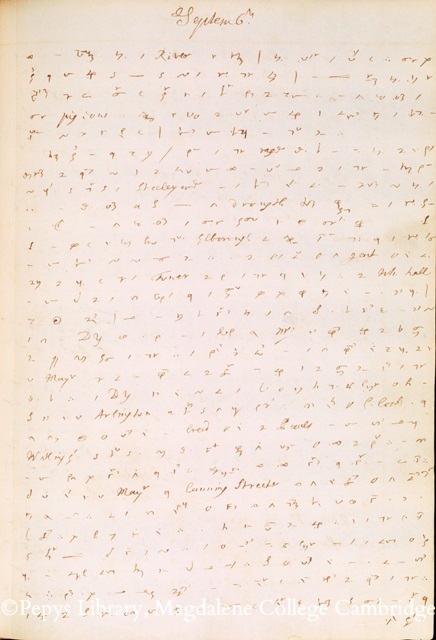
One more important detail here : the diaries were written in shorthand using a method of speedy writing called tachygraphy learnt from Thomas Shelton‘s Short Writing, 1629, also in the Pepys Library. Nobody could casually dip into the diary and discover its secrets. In fact nobody apart from their author knew what was in them until the 1820s, more than a century after Pepys’ death. The man who unlocked the secret of Thomas Shelton’s tachygraphy method of shorthand used by Pepys was a certain John Smith who was a student at Magdalene College Cambridge where the Pepys Library is still stored today. The use of shorthand enables the author to write quickly, but since nothing was retranscribed into normal prose in Pepys’ lifetime it also attests to the fact that he had no intention of sharing what he wrote.
Given the reputation of this personal journal, I find the idea of nobody actually knowing what was in the diaries for so long an intriguing one. When Smith’s transcription revealed that Pepys had made observations not only on the great events of his time – his testimony on the 1665 Great Plague is another remarkable example – but also on his criticisms and opinions of his contemporaries, along with details of his private life, in particular his extra-marital adventures for which he also used a colourful mixture of French and Spanish.
For all these quarrels and quirks to be accepted and authorised, a full publication of the whole original would only appear in the 1970s. Complete, certainly, but not necessarily what the author intended.
Reading the signs and working together
The summers of 1666 and 2026 are strangely related. Let’s finish by reminding ourselves of how the various threads are woven together.
Shorthand is a good sign system for speed and confidentiaality when writing because others can only read the signs if they know the system. The signs of extreme weather during the1660s did worry people, and there are traces of concern and even of forms of preventive action as the risk of a serious fire in London was identified by the authorities before it happened. They saw the signs, and tried to read them, but the suddenness and velocity of the Great Fire emboldened by strong winds, took things beyond what anybody could have imagined. London was rebuilt after the Great Fire, bricks replacing wood where possible, streets were widened, rents were increased. It didn’t happen overnight and the rebuild sent up the cost of living in new city. Archeologists and historians are just beginning to get to grips with the aftermath of the fire which left thousands homeless and a chaos of ruins.4
Given the similarity of summer 1666 and summer 2026 in Europe, are there any indications that we are able to read the signs of what may come? Seeing the heatwaves and the wildfires of recent months, we may think not. This is why I have chosen to finish on a postive note, with news of an initiative I came across yesterday. The mayors of Milan, Paris in Europe and Phoenix in the Arizona Desert have signed an agreement stating their intention to work together to share ways of adapting their cities to the heat and climate crisis :
“As mayors, we are confronting the same question: how do you protect millions of people when extreme heat is no longer an exceptional event, but an increasingly familiar part of summer? For Phoenix, that question has shaped city government for decades. For Paris and Milan, it is now becoming one of the defining challenges of urban leadership.”
The mayors of these cities have agreed to work together to find solutions and learn from each other. I am reminded of the Lord Mayor of London in 1666, exhausted and overwhelmed trying to solve a problem when the situation is already out of control, and I am inclined to say that, as we sweat our way through summer 2026 in Europe, that is good news for all our futures.
Anyone keeping a diary? This blog is mine.
Still want more?
The above post takes a different look at extreme weather using real events as starting points. If you also think this is a key subject, the following posts should be of interest :
Considering June 2025 wildfires in Canada with the eruption of a volcano in Iceland from 2010 : Eyafjôll, the unsaga of an eye-awful eruption
Witnessing an August 2025 wildfire from a Mediterranean beach : Eye-awful wildfire in France
Reflecting on the high price paid by trees in extreme weather events : Roots laid bare on the limestone plateau of Leucate
A fiction about a weatherman who forecasts snow during a heatwave : A story to give you the shivers
NOTES
- The Joint Research Centre webpage monitors these. ↩︎
- All quotes from Pepys’ diary come directly from the excellent constantly curated pepysdiary.com. ↩︎
- A diairist’s view on why Pepys used shorthand in his diary here. ↩︎
- This London Museum article gives a concise overview of the aftermath of the Fire for the whole population. ↩︎
Discover more from GERRY THE KENNY
Subscribe to get the latest posts sent to your email.